
Tripix vs Stan.store: Which One Fits a Travel Business?
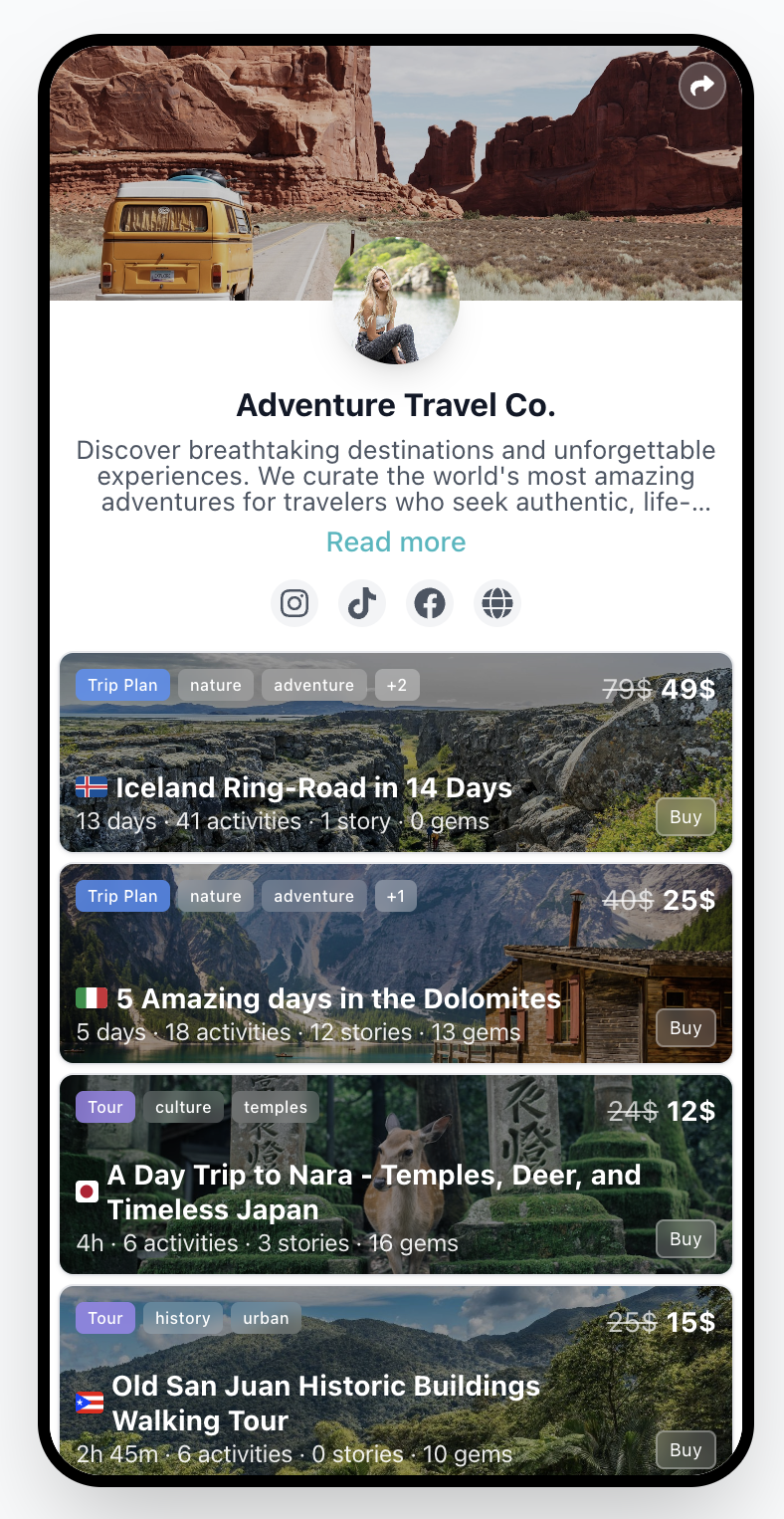
If you're using Stan, Gumroad, or Linktree to sell what you know about travel, all three are solid, widely used tools, but none of them were built with travel in mind. Stan is the closest match to what Tripix does: giving creators a storefront to sell products directly to their audience.

Elad Yaakov
Tripix Co-Founder and CEO · Last updated July 25, 2026
What Stan Is Built For
Stan.store solves a real problem well: it gives any creator, in any niche, a simple storefront and checkout without needing a developer or a separate site. That's why it's widely adopted across coaching, courses, and general digital products.
The tradeoff is that "general-purpose" means travel isn't a first-class format. There's no day-by-day itinerary builder, no map view, no structure built around how a trip actually unfolds. A travel guide sold on Stan is, functionally, the same kind of file as a workout PDF or an ebook, organized by the creator, not by the platform. And like most storefronts built around one-time downloads, what a buyer gets on day one is what they have six months later, even if the restaurant on page four has since closed.
None of that makes Stan a bad tool. It makes it a tool built for a different job than packaging travel advice.
Platform Comparison
| Stan.store | Tripix | |
|---|---|---|
| Built for | General creator storefront: courses, coaching, digital downloads, links | Travel-native products: guides, itineraries, self-guided tours |
| Travel-specific formatsday-by-day itineraries, maps, trip structure | ||
| Products stay current after purchase | No: sold as static files | Yes: update once, every past buyer sees the current version |
| Creator owns the buyer relationship | ||
| Email automation | Locked behind the $99/mo Creator Pro plan | Included on the Pioneer plan ($79/mo) |
| Pricing structure | $29/mo (Creator) or $99/mo (Creator Pro), 0% transaction fee either way | $9–$79/mo across three plans, with the transaction fee stepping down as you grow (5% → 2% → 0%) |
| Best for | Creators selling courses, coaching, or general digital products across any niche | Travel creators, tour guides, and planners selling destination-specific products |
Key Differences
Stan.store: built for creators in general
Stan's strength is breadth. It works reasonably well for almost any creator selling almost anything digital, and its checkout and storefront experience is polished. If your product is a workout plan, a Notion template, or a course, Stan is a proven, low-friction way to sell it. The most common frustration in creator reviews is that the feature most people eventually want, automated email sequences, sits behind the $99/month tier, which is a meaningful jump for a creator just getting started.
Tripix: built specifically for travel judgment
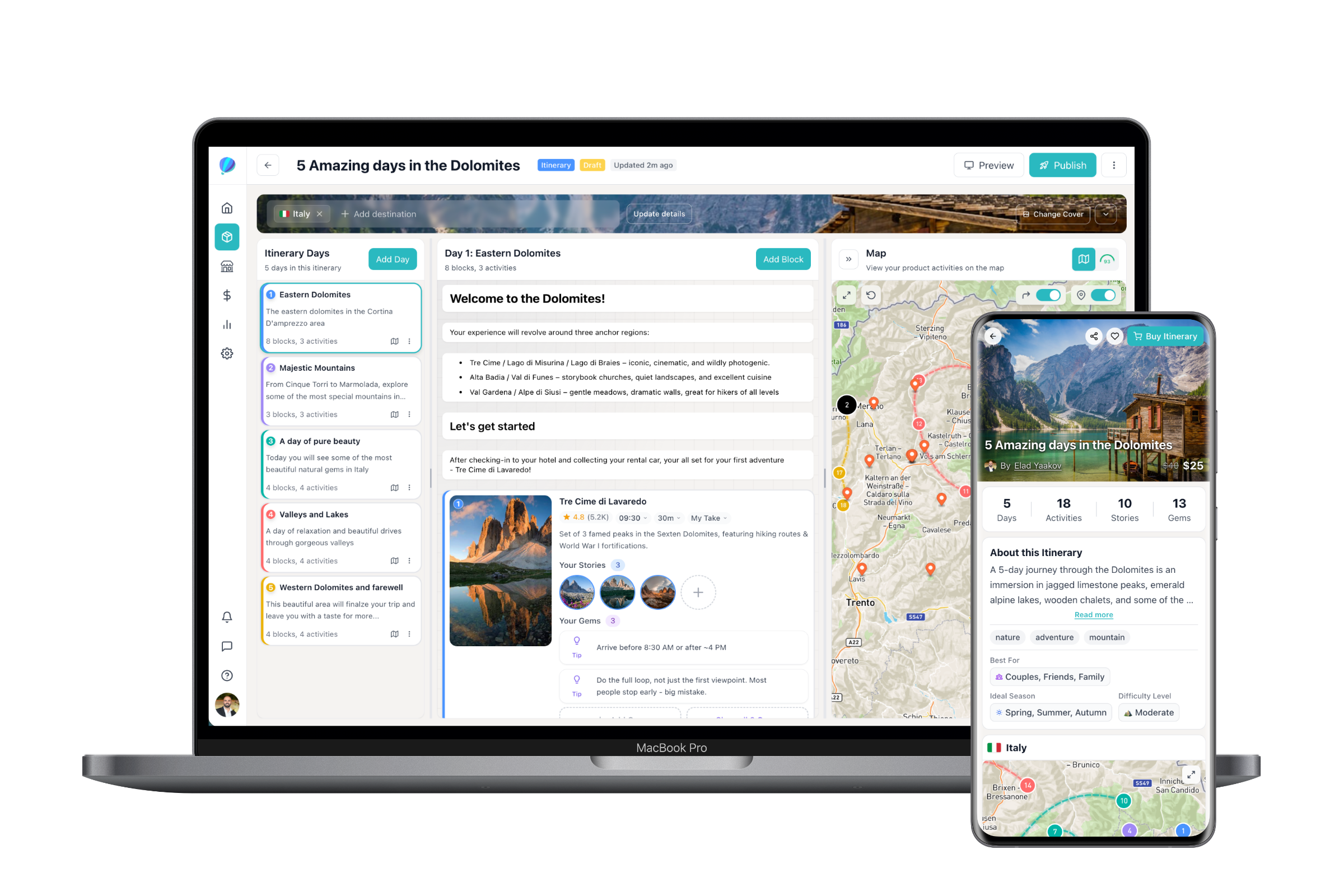
Tripix starts from a narrower premise: the person selling is a travel creator, guide, or planner, and the product is their judgment about a place. That shows up in two ways a general storefront can't easily replicate. First, the formats match how people actually plan trips: day-by-day itineraries, maps, and destination guides, not a generic file upload. Second, products stay current after they're sold: update a listing once, and everyone who already bought it sees the change, instead of holding onto whatever was true the day they paid. Alongside that, creators keep the same thing Stan offers: they own the buyer relationship, the emails, and the repeat business, just built around travel from the start.
Which Should You Choose?
Choose Stan if: your products aren't travel-specific (courses, coaching, templates, or general digital downloads) and you want a proven, general-purpose storefront.
Choose Tripix if: what you're selling is travel judgment (an itinerary, a destination guide, a self-guided tour) and you want the format, the pricing, and the after-purchase experience built around that specifically, including products that stay accurate instead of going stale the day they're sold.
It's worth saying plainly: Stan isn't the problem. It's a well-built tool for a broader job than the one most travel creators actually have. The same is true if you're a tour guide fielding the same end-of-tour questions every week: the gap isn't the platform you picked, it's that none of the general tools were built around how travel advice actually gets used.
Ready to See the Difference?
Start with a 14-day full-access trial, no credit card required, and see what a travel-native storefront looks like for what you already know.